Environmentally Friendly Recycling of Lithium-Ion Batteries

Duesenfeld combines mechanical, thermodynamic, and hydrometallurgical processes using its proprietary, patented technology. The process achieves highest material recovery rates with low energy consumption. This is made possible by a low-temperature process that does not produce toxic hydrogen fluoride. Exhaust gas scrubbing is not necessary in the mechanical processing step.

Duesenfeld operates the only recycling process that recycles not only the usual metals but also the graphite, electrolyte, and lithium. Material recycling does not mean downcycling into construction materials, such as for road construction; rather, all metals are recovered with high recovery rates in the form of high-quality secondary raw materials, up to battery-grade quality. The production of secondary raw materials as well as Duesenfeld Black® black mass using the Duesenfeld recycling process results in a credit of 3.17 tons of CO2-eq. per ton of recycled batteries compared to the primary extraction of raw materials.
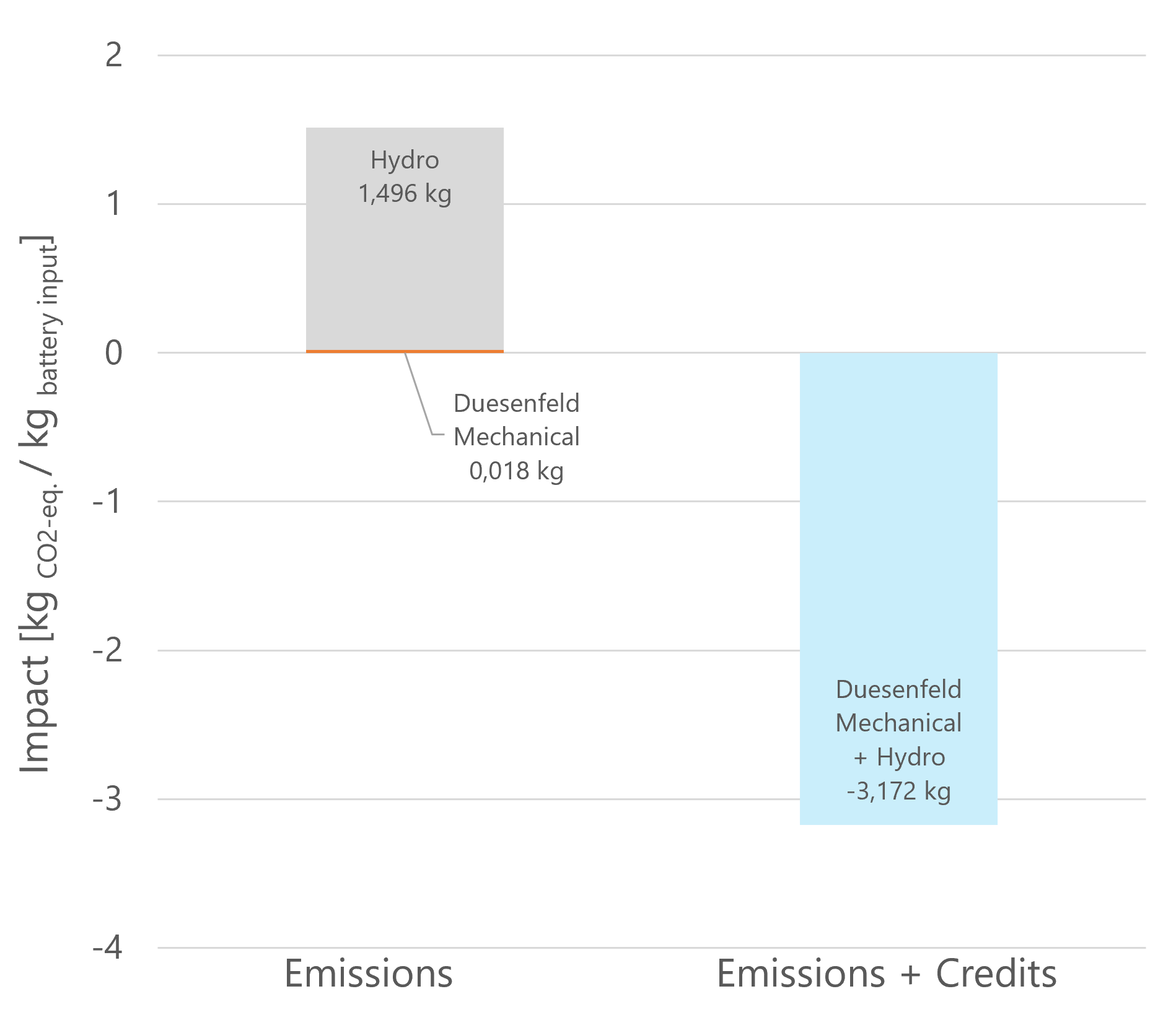
LCA-Ergebnisse des Duesenfeld Recyclingprozesses
LCA results of the Duesenfeld recycling process1)

Climate-friendly electromobility requires the best recycling technology

CO2 savings from electric mobility to slow down global warming must not be nullified by inappropriate recycling of the batteries. With Duesenfeld’s environmentally friendly process, no CO2 is generated during mechanical recycling.

  • The shredded battery is dried at low temperature and under vacuum to prevent the formation of hydrogen fluoride (HF)
  • Low temperatures result in a very short drying time, significantly increasing the recycling plant’s throughput
  • Thanks to the low temperatures, the electrolyte solvents are not contaminated and can be reused instead of having to be disposed of
  • No exhaust gas scrubbing required
  • No expensive disposal and landfill costs for toxic filter materials or wastewater
  • Plants made of carbon steel, no corrosion on the equipment

Compliance with legal requirements while maintaining high economic efficiency

The Duesenfeld process achieves a material recovery rate for lithium-ion batteries that is more than twice as high as that of conventional recycling methods through mechanical processing. Complemented by hydrometallurgical processes, nearly complete recycling is possible.

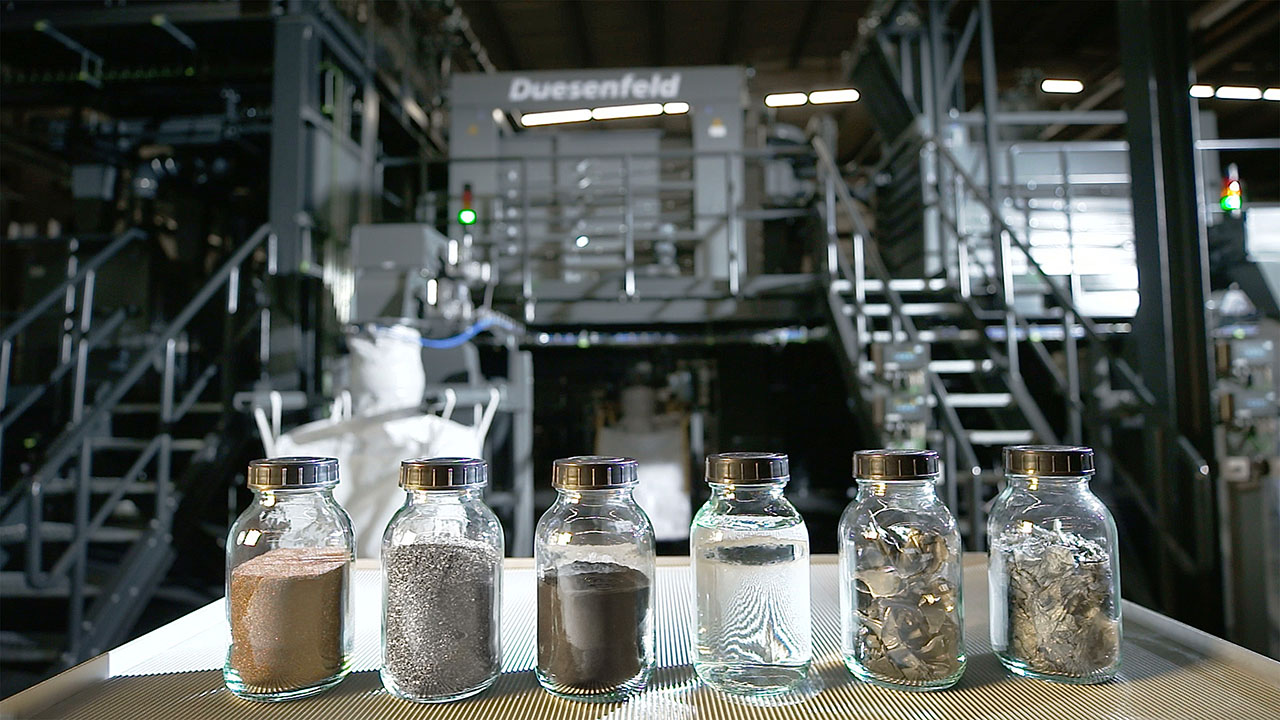
Output fractions of the mechanical recycling process

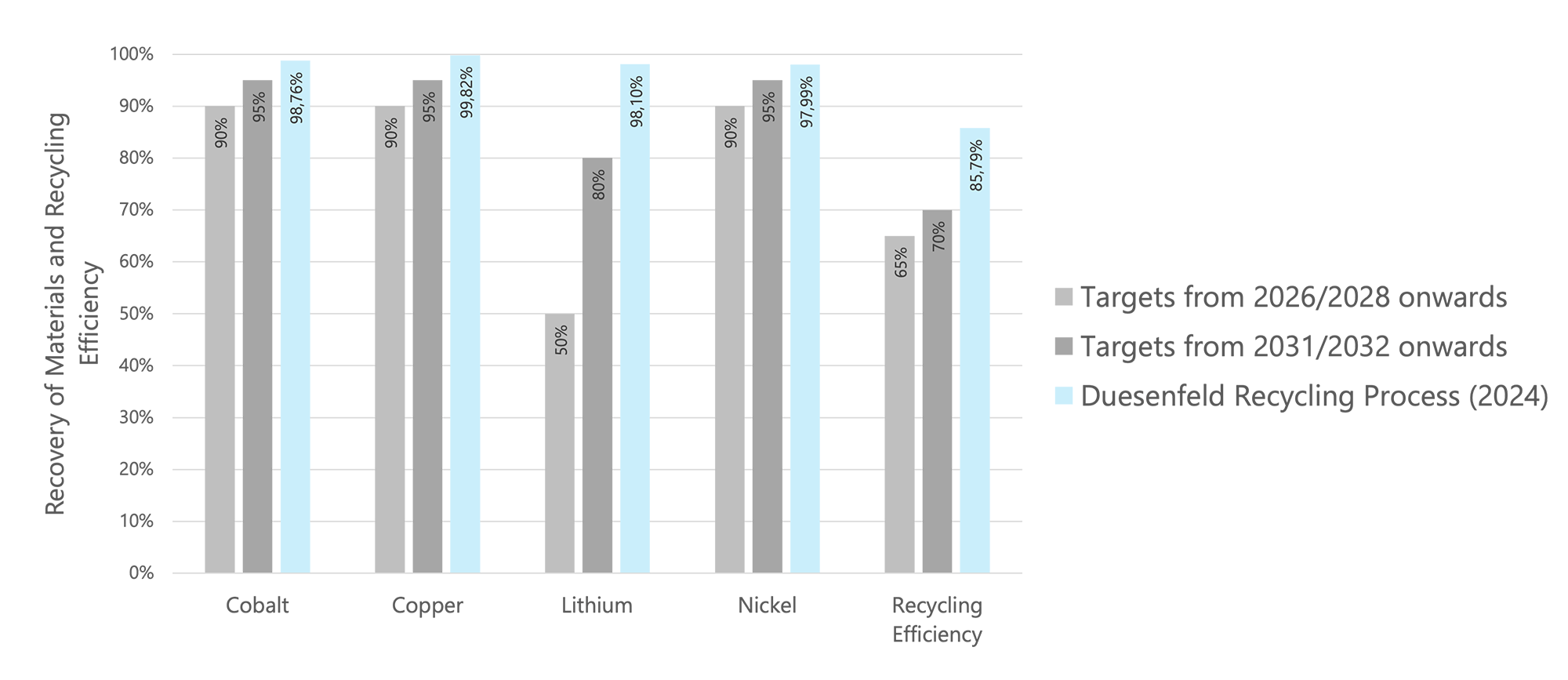
Duesenfeld already exceeds the requirements of the EU Battery Regulation 2023/1542 at its own recycling facility, with a recycling efficiency of over 85% and material recovery of over 98% of valuable metals such as cobalt, nickel, or lithium. Short processing times and the prevention of toxic gas emissions reduce operating costs in mechanical recycling, which is particularly important when recycling batteries that do not contain valuable materials, such as lithium iron phosphate batteries. As a result, the process already offers regulatory certainty for future requirements while simultaneously laying the foundation for the economic and ecological recycling of battery materials.

Comparative overview of target values for material recovery and recycling efficiency under EU Battery Regulation 2023/1542
Comparative overview of target values for material recovery and recycling efficiency under EU Battery Regulation 2023/1542.2)

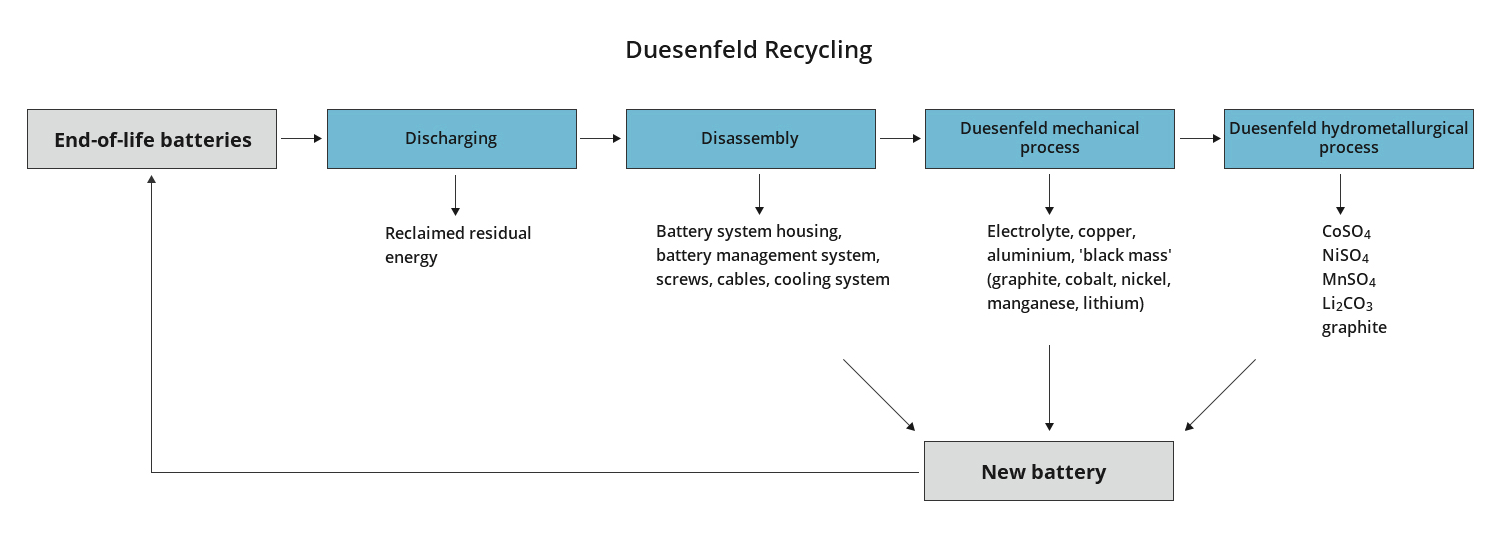
Process Flow of the Duesenfeld Recycling Process

The innovative Duesenfeld process flow was developed specifically for lithium-ion batteries and is protected by wide-ranging and robust patents. Through Duesenfeld’s unique combination of discharge, mechanical processing, and hydrometallurgy—as well as the elimination of high-temperature processes—a comprehensive closed-loop recycling of battery materials is achieved. This makes Duesenfeld the technology leader in the field of lithium-ion battery recycling.

Recovery with the Duesenfeld recycling method
Recovery at Duesenfeld Recycling

Discharging

The recycling of lithium-ion batteries begins with the patented deep discharge of the batteries and the recovery of the energy. Duesenfeld’s deep discharge process ensures the safe and efficient discharge of cells connected in series, modules, or packs. The intelligent control software enables automated deep discharge of the batteries regardless of various factors such as state of charge (SOC), voltage, battery age, or manufacturer. The high linear discharge power achieves a high throughput and maximum efficiency. The recovered electricity can be used to power the recycling plant or fed into the grid.

Duesenfeld’s discharge systems guarantee maximum safety and protection against operator’s errors through continuous software monitoring during the discharge process. For example, the connected lithium-ion batteries can be safely and easily replaced during operation via a quick-connect system.

Thanks to the patented technology, there is no further electrical risk for subsequent process steps. At the same time, there is no need for personnel trained in high-voltage safety during the subsequent optional disassembly of lithium-ion battery packs.

The Duesenfeld discharge of lithium-ion batteries ensures employee safety, process reliability, and high efficiency.

Mechanical Processing

The mechanical processing of lithium-ion batteries is a challenging task due to the flammable electrolyte and hazardous components. To ensure safe processing, Duesenfeld has developed and patented a method that eliminates the specific hazards in the process.

Mechanical Processing

After discharge and disassembly, the batteries are comminuted under an inert gas atmosphere, and the electrolyte solvent is recovered from the comminuted material by vacuum distillation. A low process temperature prevents the formation of toxic gases, eliminating the need for exhaust gas scrubbing. The separated solvent has a very high purity level because the production of hydrogen fluoride from reaction products is avoided. The solvent is sent to the chemical industry for further processing. The plant is also able to process dry electrode scraps from battery cell production. No retooling is necessary and the shredded material can be taken to the next stage of the sorting process without the need for drying time. The dried shredded material is separated into different material fractions based on physical properties such as particle size, density, and magnetic and electrical properties, which are then further processed metallurgically. The iron, copper, and aluminum fractions are fed into established recycling channels. Duesenfeld has developed a hydrometallurgical process for processing the so-called Duesenfeld Black® black mass, which contains the electrode active materials and the conductive salt. Using this patented process, the metals cobalt, lithium, nickel, and manganese, as well as graphite, are recovered from the Duesenfeld Black®.

Hydrometallurgy

Duesenfeld has developed and patented its own process that enables a complete closed-loop system through the production of battery-grade raw materials for electrode active materials.

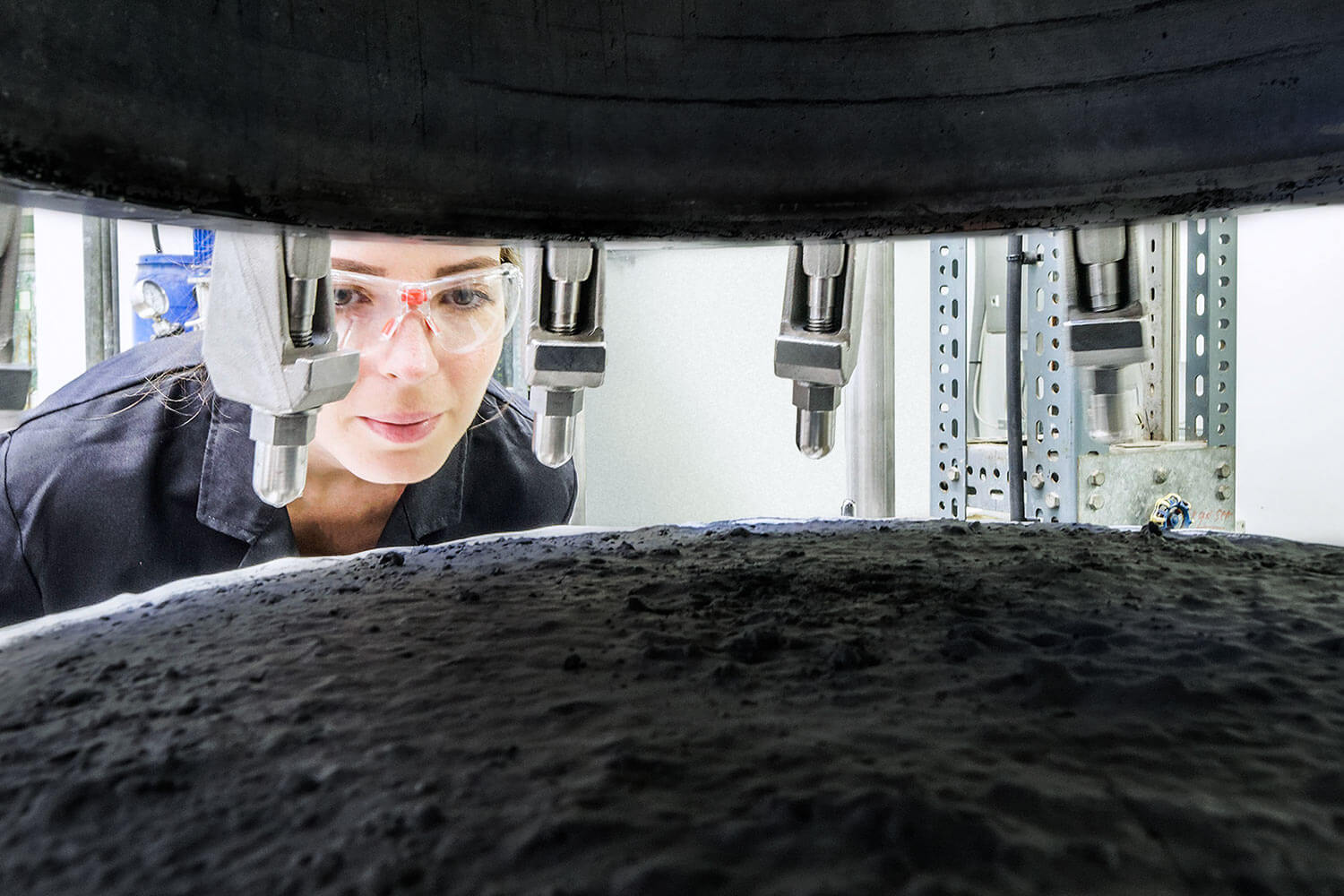
Recovered graphite
Recovered graphite

A particular challenge in the hydrometallurgical processing of Duesenfeld Black® is the fluoride-containing conducting salt, which can lead to the formation of hydrogen fluoride during wet chemical processing. Through a patented, specific pretreatment step, Duesenfeld completely removes the fluoride prior to leaching, thereby reliably preventing the formation of hydrogen fluoride. Following fluoride removal, the metals are leached and thus separated from the graphite. Lithium, cobalt, nickel, and manganese are separated from one another using various extraction processes, purified, and recovered in the form of salts. The salts serve as feedstock for the production of new cathode active materials.


1) Duesenfeld LCA results, Öko-Institut Consult GmbH, 2026 according to ISO 14040/44, ecoinvent 3.10

2) Recycling Efficiency 2024 Duesenfeld Recycling Plant, Wendeburg, Targets in accordance with EU Battery Regulation 2023/1542